
Finding someone to help with everyday tasks is only the beginning of arranging meaningful senior support. The more important question is whether that person fits the customer’s needs, preferences, schedule, and home environment. A professional may be available nearby but lack experience with the requested task. Another may have suitable skills but be unable to accommodate the customer’s preferred pace. BabaTap places AI Matching at the centre of its approach to addressing these differences, with the goal of connecting customers and BabaTap Pros through more thoughtful, informed selections.
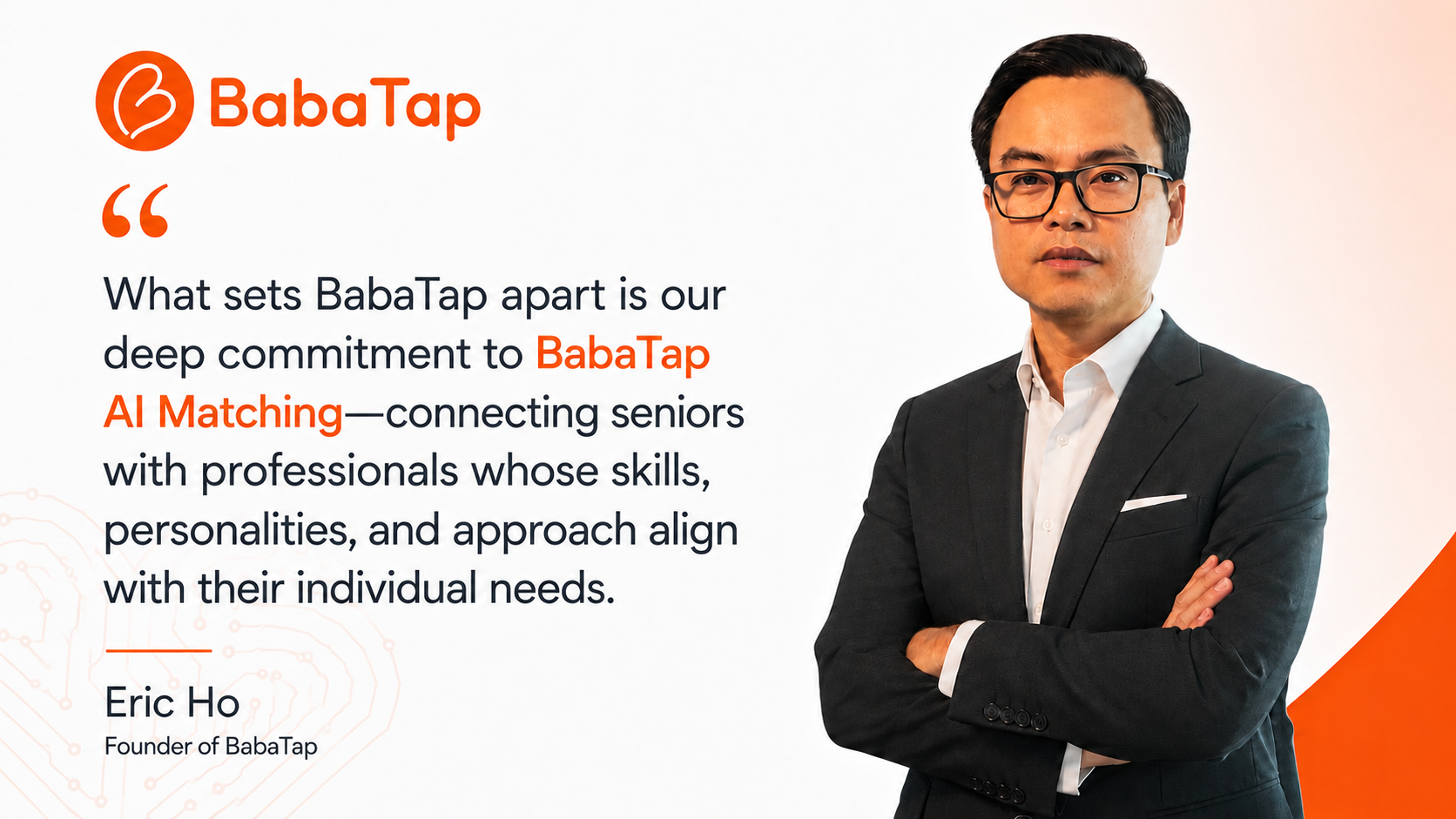
Many providers offer familiar forms of non-medical assistance, including companionship, cleaning, errands, meal preparation, and transportation. BabaTap’s core differentiator is its emphasis on how customers and professionals are brought together. The vision behind BabaTap AI Matching is to look beyond a service category and an available appointment. It brings attention to the practical and personal details that can influence whether a visit feels comfortable, useful, and dependable. Technology supports that process by helping organize relevant information, while people remain responsible for clarifying needs and making appropriate decisions.
Consider two seniors requesting household cleaning. One prefers quiet visits, fragrance-free products, and careful attention to belongings. The other enjoys conversation and wants the kitchen prioritized before a family gathering. Their service category may be identical, but their expectations differ. Similarly, two transportation requests can involve different vehicle requirements, appointment deadlines, and levels of non-medical accompaniment. Matching becomes more meaningful when those differences are recognized before a professional accepts a booking, rather than discovered unexpectedly upon arrival.
The following 55 factors describe a proposed framework for BabaTap AI Matching. They explain the information that can support thoughtful selection, rather than asserting that every factor is already automated or available for every booking. Only relevant, appropriately collected information should be considered. Essential requirements should be distinguished from optional preferences, and missing details should prompt clarification rather than assumptions. Within that framework, matching can remain practical, transparent, and responsive to the people involved.

Requested service category. Identify whether the customer needs cleaning, companionship, errands, meal preparation, transportation, technology help, or another supported non-medical service before considering individual professionals.
Specific task requirements. Compare the actual requested activities with the professional’s capabilities, because a broad service label alone cannot explain everything a customer expects.
Multiple-service compatibility. Establish whether one BabaTap Pro can appropriately complete all requested tasks or whether separate arrangements are needed for different parts of the booking.
Relevant practical experience. Consider experience with comparable assignments, focusing on demonstrated familiarity with the work rather than relying exclusively on a general profile description.
Applicable training completion. Review relevant completed training where records are available, while recognizing that training does not automatically establish competence for every customer situation.
Required credentials. Where a task requires particular credentials or authorization, confirm those requirements before matching instead of treating them as optional advantages.
Professional service boundaries. Compare the request with the provider’s stated limits so that neither party expects medical care or unsupported duties from a non-medical booking.
Task-priority alignment. Understand which activities matter most to the customer and whether the professional can address those priorities within the agreed appointment.
Estimated service duration. Allow realistic time for the requested work, including preparation and customer interaction, rather than assuming every appointment requires the same duration.
Required equipment availability. Check whether necessary supplies or equipment will be provided by the customer or professional, and resolve any gaps before confirming arrangements.
Customer service location. Use the actual booking location to identify practical candidates while avoiding unnecessary collection or disclosure of unrelated location information.
Professional service area. Respect the cities, neighbourhoods, and travel boundaries a BabaTap Pro has agreed to serve, rather than assuming unlimited geographical availability.
Travel-time feasibility. Consider a realistic journey to the appointment, acknowledging that estimates can change and should not be presented as guaranteed arrival times.
Requested date availability. Check that the professional is available on the required date and distinguish confirmed availability from an outdated or incomplete calendar entry.
Appointment-time compatibility. Compare the customer’s preferred time with the professional’s availability, including whether the booking requires an exact start or permits a flexible window.
Existing booking conflicts. Review other accepted commitments to avoid overlapping assignments and ensure that an apparently open time can genuinely accommodate the proposed visit.
Travel and preparation buffers. Leave appropriate space between assignments for travel, parking, preparation, and reasonable transitions rather than scheduling professionals continuously without practical allowances.
Recurring schedule compatibility. For repeat support, assess whether the professional can accommodate the proposed pattern instead of matching solely on availability for the first appointment.
Customer scheduling flexibility. Identify acceptable alternative dates or times, with permission, so that a suitable match may be found without changing essential customer requirements.
Building-access arrangements. Consider elevators, stairs, reception procedures, and entry instructions that affect arrival or task completion, sharing detailed access information only when necessary.
Parking practicality. Clarify parking access, restrictions, and any agreed costs because these details can influence arrival planning and the feasibility of a mobile appointment.
Service-environment familiarity. Consider relevant experience in private homes, apartments, retirement residences, or permitted facility settings, each of which may involve different practical expectations.
Facility access requirements. Where applicable, confirm visiting procedures and authorization requirements rather than assuming that a customer booking automatically permits access to every location.
Workspace suitability. Identify whether the available space supports the requested activity, including cleaning equipment placement, meal preparation surfaces, or other essential working arrangements.
Household pet compatibility. Discuss pets that may be present and relevant provider limitations, arranging appropriate boundaries so that the visit is comfortable for everyone involved.
Cleaning-product preferences. Record customer-selected requirements such as fragrance-free products or surface-specific supplies without inferring medical conditions from those preferences.
Customer-selected service pace. Consider whether the customer prefers a steady, unhurried visit or efficient task-focused assistance, while preserving enough time for appropriate work.
Planned rest breaks. Where the customer requests pauses, allow for them in the appointment structure rather than interpreting slower participation as a reason to exclude someone.
Practical mobility accommodations. Consider customer-described access needs and mobility aids only where relevant to service delivery, without assuming that a non-medical provider can perform transfers.
Accompaniment boundaries. Clarify whether the request involves company, walking alongside someone, or another permitted activity, and separate these from lifting or unsupported physical assistance.
Preferred spoken language. Where possible, connect customers with professionals who can communicate in their chosen language, using stated ability rather than assumptions based on names.
Communication-channel preference. Consider whether booking coordination works best through calls, messages, or an authorized family contact, while ensuring important information reaches the appropriate person.
Conversation preference. Respect whether the customer enjoys regular conversation, occasional interaction, or a quieter visit, without assigning a fixed personality label.
Explanation style. Match preferences for brief instructions or step-by-step explanations with the professional’s stated communication approach, allowing both parties to adjust during the visit.
Hearing-related communication accommodations. Where requested, consider practical adjustments such as written information, facing the customer when speaking, or reducing background noise during explanations.
Visual-information accommodations. Consider customer-requested adjustments such as reading instructions aloud or explaining where objects have been placed, within the agreed service boundaries.
Customer-led household customs. Respect voluntarily shared household practices relevant to the visit, without using ethnicity, religion, or other identity assumptions as substitutes for actual instructions.
Privacy and personal-space preferences. Clarify which rooms, belongings, or subjects are outside the appointment’s scope so the professional understands and respects the customer’s boundaries.
Belongings and organization preferences. Record whether items should remain in familiar positions and require permission before reorganizing possessions, opening storage areas, or discarding household materials.
Authorized family coordination. Establish whether a family member may receive updates or manage arrangements, while preserving the senior’s participation and avoiding unauthorized disclosure.
Previous successful pairing. Consider a customer’s positive history with a particular BabaTap Pro when that professional remains suitable and available for the new request.
Explicit professional preference. Respect a customer’s request for a particular provider where feasible, while explaining that preference cannot override availability or essential service requirements.
Previous mismatch information. Review relevant, documented concerns from earlier bookings to avoid repeating an unsuitable arrangement, distinguishing verified issues from unsupported allegations.
Relevant customer feedback. Consider comments about comparable services, using feedback as contextual evidence rather than treating every rating as equally informative or reliable.
Professional task preferences. Account for the services a BabaTap Pro prefers and agrees to perform, supporting matches that are appropriate and acceptable to both parties.
Confirmation responsiveness. Where reliable records exist, consider how consistently a professional responds to booking requests, while allowing for reasonable circumstances and communication difficulties.
Arrival reliability. Review documented punctuality in context, recognizing that traffic, incorrect access instructions, or customer changes can affect arrival without indicating poor professional conduct.
Appointment completion history. Consider relevant completion records and the reasons behind interruptions, avoiding automatic penalties when an assignment could not appropriately proceed.
Service-procedure adherence. Review documented compliance with applicable booking instructions and agreed processes, ensuring that any concerns can be checked and corrected where necessary.
Agreed price compatibility. Confirm that the proposed service and disclosed charges fit the accepted booking terms, without using assumptions about a customer’s wealth or vulnerability.
Transportation vehicle suitability. For transport requests, confirm that the available vehicle fits the agreed passenger and equipment requirements rather than assuming every vehicle is interchangeable.
Mobility-aid storage compatibility. Where relevant, confirm that a folded walker or wheelchair can be accommodated, distinguishing storage from accessible transport or transfer assistance.
Appointment-related timing requirements. For outings or transport, account for check-in deadlines, return arrangements, and agreed waiting time so the booking reflects the complete journey.
Activity-specific instructions. Consider practical details such as shopping lists, customer-provided meal instructions, or devices needing help, keeping specialized advice outside the provider’s role.
Final mutual confirmation. Before the match becomes an appointment, ensure that the customer and BabaTap Pro understand and accept the tasks, timing, boundaries, and relevant arrangements.
These factors should not function as 55 equally weighted boxes. Some represent essential conditions: a professional must be available, able to perform the task, and willing to accept the assignment. Others represent preferences that may improve comfort but permit flexibility. A useful matching approach distinguishes between these categories. It should never recommend someone who fails an essential requirement simply because that person scores well on softer preferences. When no suitable match exists, the appropriate response is clarification, an alternative arrangement, or an honest explanation of availability.
The value of AI lies in helping organize information that can otherwise become scattered across booking notes, profiles, schedules, and previous conversations. For example, a note requesting fragrance-free cleaning and minimal conversation contains two practical preferences. A matching assistant could help surface those requirements for review. However, interpreting written notes can involve uncertainty. Ambiguous language should be checked with the customer, and automated summaries should remain open to correction. Technology is most useful when it helps people ask better questions and prepare more carefully.
Personal compatibility also needs careful treatment. BabaTap’s vision should not depend on assigning seniors psychological scores or guessing their personalities from age, appearance, or background. Useful compatibility information comes from expressed preferences and relevant service experience. A customer can say they enjoy conversation or prefer quiet without being placed into a permanent category. Preferences may change between visits, and professionals can adapt. Matching should support those choices rather than narrow someone’s options through assumptions that they have never confirmed.
Privacy and fairness are important parts of this approach. Only information necessary for arranging the service should be requested, and sensitive details should not be shared more widely than needed. A preference for accessible communication should help arrange accommodation, not reduce someone’s access to support. Customer feedback and professional records should also be reviewed for mistakes or unfair patterns. Both customers and BabaTap Pros need practical ways to correct inaccurate information and explain circumstances that an automated process may misunderstand.
For BabaTap Pros, thoughtful matching can provide clearer expectations before accepting work. Knowing the task priorities, travel requirements, supplies, and communication preferences helps a professional judge whether the assignment is suitable. For customers, the same preparation can reduce avoidable surprises and repeated explanations. These are intended benefits, not guaranteed outcomes. Their achievement should be assessed through actual service experiences, including feedback about suitability, communication, reliability, and whether both parties understood the booking before it began.
Human judgment remains essential throughout the process. An operations team can clarify an unusual request, resolve conflicting information, or reconsider a recommendation when circumstances change. Customers should retain the ability to express concerns, and professionals should be able to decline work outside their capabilities. A successful match is a mutually understood arrangement, not merely an automated selection. When adjustments are needed, the system should support a respectful conversation rather than force the original recommendation to proceed.
BabaTap’s AI Matching vision places the quality of the connection at the centre of senior support. The 55-factor framework shows how that connection can be considered in practical detail, from service skills and scheduling to communication and familiar routines. As the approach develops, its credibility should rest on transparent capabilities and dependable experiences. The goal is straightforward: help each customer connect with a BabaTap Pro who understands the assignment, respects their preferences, and can provide the agreed support with care and professionalism.
BabaTap
Bài viết liên quan: