
Non-Medical Home Care vs. Home Health Care: What’s the Difference? When families begin looking for Hourly Senior Support services, they often encounter terms such as non-medical home care, home health care, in-home senior care, personal support, companion care, home support, and skilled nursing care. Although these terms can sound similar, they describe different types of assistance and are designed for different needs. The confusion becomes especially common when an older adult wants to remain independent at home but does not necessarily need a nurse, therapist, or medical treatment. Non-medical home care generally focuses on practical, everyday support such as companionship, transportation, grocery shopping, light housekeeping, meal preparation, errands, and assistance with maintaining a comfortable daily routine. Home health care, on the other hand, is centered on medical or clinically related needs and may involve skilled nursing, physical therapy, occupational therapy, speech-language pathology, or other services provided according to a health-related care plan. In the United States, Medicare distinguishes home health services from ordinary household or custodial support, while Health Canada describes home and community care as a broad combination of health and social services delivered in homes and communities. For families searching online, understanding this distinction can make it much easier to identify the right type of help. A senior who needs someone to drive them to an appointment, pick up groceries, prepare a simple meal, tidy the home, accompany them on an outing, or simply spend meaningful time with them may not be looking for medical care at all. They may need flexible, hourly, non-medical companion support that helps everyday life become easier, safer, and more independent without turning the home into a clinical environment.
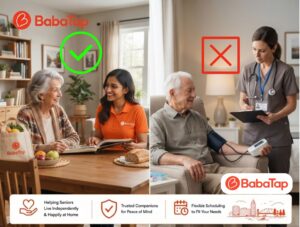
What Is Non-Medical Home Care?
Non-medical home care is designed around everyday living rather than medical treatment.
The purpose is usually to help an older adult continue living comfortably and independently at home while receiving practical assistance with tasks that may have become difficult because of age, reduced mobility, transportation limitations, loneliness, or changes in daily routines.
Depending on the provider, non-medical home care may include:
- Companionship
- Conversation and social interaction
- Transportation and driving assistance
- Grocery shopping
- Running errands
- Meal preparation
- Light housekeeping
- Laundry
- Organizing everyday household tasks
- Accompanying seniors to appointments
- Accompanying seniors to social activities
- Assistance with shopping trips
- Help with getting out of the house
- Walking companionship
- Assistance with maintaining a daily routine
The important point is that these services do not require the provider to function as a medical professional.
A companion can drive a senior to the grocery store without providing medical transportation.
A companion can help organize groceries without administering medication.
A companion can clean the kitchen without providing nursing care.
A companion can spend two or three hours talking, walking, shopping, or completing errands with a senior without delivering clinical treatment.
This distinction is extremely important for families because many older adults do not need intensive medical intervention. What they need is practical support that fills the gap between living completely independently and requiring professional medical care.
Why Do Families Search for “Home Care” When They Actually Need Non-Medical Help?
One of the biggest challenges families face is knowing what service category to search for.
A daughter may search for “home care for elderly mother.”
A son may search for “senior care at home.”
A family member may type “home care for seniors near me,” “caregiver for elderly parent,” “in-home senior care,” or “home care services for elderly.”
These searches do not necessarily mean the family is looking for medical care.
Often, the underlying problem is much simpler.
The senior may no longer feel comfortable driving.
The family may live several hours away.
The senior may need someone to take them grocery shopping.
The house may need light cleaning.
The senior may want someone to accompany them to appointments.
They may feel isolated and want regular companionship.
They may need help getting to community activities.
They may simply need someone trustworthy to spend a few hours with them each week.
This is where the phrase “home care” can become confusing.
In everyday conversations, people often use home care as a broad term for almost any support provided at home. However, providers and healthcare organizations may use more specific terminology to distinguish medical services from personal, household, social, and companion services.
For families, the best approach is therefore to look beyond the label and ask a more practical question:
“What does my senior actually need help with?”
If the answer involves everyday activities rather than medical treatment, non-medical home care may be the better fit.
Many seniors do not need medical treatment every day. What they often need is practical, hourly support such as transportation, grocery shopping, companionship, and help with daily activities. Non-medical companion care fills the gap between full independence and medical home care.
What Is Home Health Care?
Home health care is different because it is primarily connected to healthcare needs.
Home health services may be provided to people recovering from an illness, surgery, injury, hospitalization, or other health condition. They can also support people who require skilled care at home.
For example, Medicare describes covered home health services as including medically necessary part-time or intermittent skilled nursing, physical therapy, occupational therapy, speech-language pathology, medical social services, and certain home health aide services when eligibility requirements are met.
Examples can include:
- Skilled nursing
- Wound care
- Certain injections
- Monitoring health conditions
- Physical therapy
- Occupational therapy
- Speech therapy
- Medical social services
- Certain types of personal care connected to skilled care
The goal is not simply to make everyday life more convenient.
The goal is to provide healthcare-related services in the home.
For example, a person recovering after surgery may require physical therapy to regain mobility. Another individual may need skilled nursing for wound care. Someone recovering from an illness may need professional monitoring and treatment.
In those situations, home health care can play an important role.
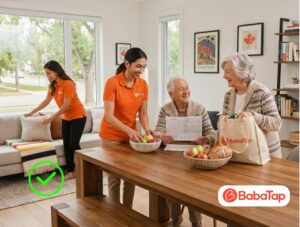
Home Health Care Is Not the Same as Having Someone Around All Day
This is another important distinction.
Families sometimes assume that hiring a home health agency means someone will remain in the home for an entire day.
That is not necessarily the case.
In the United States, Medicare’s home health benefit is generally structured around part-time or intermittent skilled services for eligible individuals. Medicare specifically states that it does not cover 24-hour-a-day home care and generally does not cover homemaker services such as shopping and cleaning when they are unrelated to the care plan.
This means there can be a significant gap between medical home health services and everyday senior assistance.
A senior may not qualify for, need, or want skilled medical care.
But that same senior may still benefit enormously from having a trusted person available for a few hours.
That is where non-medical hourly services can make sense.
The Core Difference: Medical Need vs. Everyday Support
The easiest way to understand the difference is to look at the reason the service is being requested.
Non-medical home care answers:
“How can we make everyday life easier for this senior?”
Home health care answers:
“What healthcare services does this person need to receive safely at home?”
Consider two examples.
An 82-year-old senior lives alone and has difficulty driving. She is healthy enough to remain at home, but she needs someone to take her grocery shopping twice a week, help with errands, and accompany her to community activities.
This is primarily an everyday support need.
Now consider an 82-year-old senior who has recently undergone surgery and requires skilled physical therapy and professional monitoring during recovery.
That is a healthcare need.
Both people may search for “senior home care.”
Both may want to remain at home.
But the appropriate service can be very different.
A Simple Comparison
| Non-Medical Home Care | Home Health Care |
|---|---|
| Focuses on everyday living | Focuses on healthcare needs |
| Often companion-based | Often clinically based |
| May include transportation | May include skilled clinical services |
| May include grocery shopping | May include skilled nursing |
| May include light housekeeping | May include physical therapy |
| May include companionship | May include occupational therapy |
| May be arranged by the family | Often involves a healthcare provider or care plan |
| Commonly flexible and hourly | Often structured around medical needs |
| Does not provide medical treatment | Provides qualified healthcare services |
| Supports independence and daily life | Supports recovery, treatment, or health management |
The distinction becomes particularly useful when families compare different providers.
A company may describe itself as a “home care agency,” but that does not automatically mean it offers skilled medical care.
Likewise, a home health agency may provide some personal assistance as part of a broader medical care plan, but that does not necessarily mean it provides the flexible companionship and everyday assistance that a senior wants.
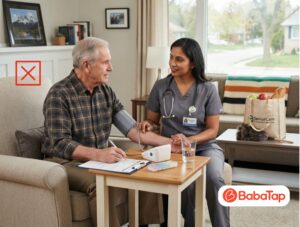
Where Does Companion Care Fit?
Companion care sits firmly within the non-medical side of senior support.
The emphasis is on presence, assistance, social connection, and everyday activities.
For many older adults, companionship is not a luxury.
It can be an important part of maintaining an active and independent lifestyle.
A companion may spend several hours with a senior doing ordinary activities such as having coffee, taking a walk, visiting a local store, preparing lunch, organizing groceries, or going out for an appointment.
The value comes from having reliable support without introducing unnecessary medical complexity.
This can be particularly helpful for seniors who live alone.
A family may not need a nurse.
They may simply need someone dependable who can be there when family members cannot.
Non-Medical Home Care Can Be Hourly
Another major difference is flexibility.
Many families do not need someone in the home for eight or twelve hours every day.
They may only need support for two hours on Tuesday, three hours on Thursday, and several hours on Saturday.
An hourly model can make this type of support more practical.
For example:
A senior needs transportation to the grocery store once a week.
A senior wants companionship for afternoon walks.
A senior needs help with light household tasks.
A senior wants someone to accompany them to appointments.
A senior needs help running errands while an adult child is at work.
These needs can often be addressed through scheduled hourly companion services rather than full-time care.
This is one of the reasons families should not assume that “home care” automatically means full-time caregiving.
The right service can be based on the senior’s actual schedule.
Why Hourly Support Can Be a Better Fit for Independent Seniors
Many seniors strongly value their independence.
They do not want someone living in their home.
They do not want constant supervision.
They may not need assistance every morning and evening.
They simply need a little help at specific times.
Hourly non-medical care can respect that preference.
Instead of replacing independence, the service can support it.
A senior can continue living in their own home while receiving assistance when necessary.
This creates a middle ground between complete independence and full-time care.
For adult children, it can also provide peace of mind.
Instead of worrying that their parent is struggling alone, they know someone can be scheduled to help with specific tasks.
That can make aging at home feel more manageable for everyone.
How to Know Which Type of Home Care Your Senior Needs
When families are comparing non-medical home care with home health care, they should begin by identifying the specific tasks the senior needs help with.
Ask these questions:
Does the senior need medical treatment?
Does the senior need wound care?
Does the senior need physical therapy?
Does the senior need skilled nursing?
Does a healthcare provider recommend professional medical services at home?
If the answer is yes, home health care may be appropriate.
If the senior instead needs:
A ride to the grocery store
Someone to accompany them to appointments
Help with errands
Light housekeeping
Meal preparation
Companionship
Help getting out of the house
Social interaction
Assistance maintaining an active routine
Then non-medical home care may be more relevant.
The two types of care can also exist alongside each other.
A senior receiving physical therapy may still benefit from a companion who helps with groceries.
A person receiving skilled nursing may also need transportation and household assistance.
A family should therefore think of these services as complementary rather than automatically competing.
Can Non-Medical Home Care and Home Health Care Work Together?
Yes.
In many situations, an older adult may benefit from both.
Imagine a senior recovering from a medical procedure.
A home health professional may visit to provide skilled services according to the healthcare plan.
But that professional may not be available to spend several additional hours helping the senior grocery shop, socialize, complete errands, or maintain the household.
A non-medical companion could fill that practical gap.
This distinction is important because families sometimes expect one provider to solve every problem.
In reality, different services may address different parts of an older adult’s life.
Home health care addresses healthcare-related needs.
Non-medical companion services address everyday support and quality of life.
Together, they can help create a broader support system around the senior.

What Non-Medical Home Care Does Not Mean
The term “non-medical” can sometimes create confusion.
It does not mean the service is unimportant.
It simply means the service is not intended to replace professional healthcare.
A companion should not be presented as a nurse.
A companion should not diagnose medical conditions.
A companion should not independently provide skilled medical treatment.
A companion should not replace a physician, nurse, physical therapist, occupational therapist, or other qualified healthcare professional.
Instead, the companion provides practical support around the senior’s daily life.
That boundary is valuable.
It helps families understand exactly what they are purchasing and prevents unrealistic expectations.
Common Examples of Non-Medical Senior Support
Consider a senior named Robert who lives independently.
Robert does not need nursing care.
He can manage his medication and personal care.
However, he stopped driving several months ago.
His daughter lives in another city.
Robert needs to buy groceries, visit the pharmacy, attend social activities, and occasionally go to appointments.
His biggest problem is not medical treatment.
His biggest problem is transportation and companionship.
An hourly companion could potentially help Robert by driving him to appropriate destinations, accompanying him while shopping, helping with errands, and spending time with him during the week.
Now consider another senior, Margaret.
Margaret has recently returned home after a hospital stay. Her physician has ordered skilled nursing and physical therapy.
Margaret’s situation is different.
She has a medical recovery plan.
Home health care may be appropriate for the skilled services involved.
If Margaret also needs help with groceries or companionship, a separate non-medical service could potentially supplement that support.
The difference becomes much clearer when we stop focusing only on the word “home care” and focus on the actual need.
Why Families Should Look Beyond the Word “Caregiver”
Another common problem is the word “caregiver.”
Caregiver can mean many things.
A family caregiver might be a daughter helping her mother.
A professional caregiver might provide personal support.
A companion might provide transportation and social assistance.
A home health aide may work as part of a healthcare-related service.
A nurse provides skilled medical care.
These roles are not interchangeable.
When searching for help, families should therefore describe the task rather than relying only on one broad term.
Instead of searching only for “caregiver for seniors,” families can search for phrases such as:
“hourly senior companion”
“senior companion service”
“non-medical home care”
“senior transportation and companionship”
“elderly companion at home”
“in-home companion for seniors”
“senior help with errands”
“senior grocery shopping assistance”
“hourly home care for elderly”
“companion services for aging parents”
These searches can help families discover providers whose services are closer to what they actually need.
Why the Right Search Terms Matter
The terminology families use can influence the type of providers they discover.
Someone searching for “home health care” may find agencies focused on skilled nursing, therapy, and medically necessary services.
Someone searching for “non-medical home care” may find providers focused on personal support, household assistance, companionship, and daily living.
Someone searching for “senior companion services” may find providers that specialize in social connection and practical assistance.
Someone searching for “hourly senior care” may find flexible services designed around specific schedules.
This is particularly important when a senior does not require medical care.
The family may initially believe that they need a traditional home care agency because that is the terminology they know.
After understanding the difference, they may realize that what they actually need is an hourly companion service.
What Families Should Ask a Non-Medical Home Care Provider
Before choosing a provider, families should ask clear questions.
What services are included?
Is the service non-medical?
Is the service available hourly?
Can the companion provide transportation?
Can the companion accompany the senior while shopping?
Can the companion help with light housekeeping?
Can the companion prepare simple meals?
Can the companion accompany the senior to appointments?
How are companions selected?
Are background checks performed?
How are schedules arranged?
What happens if the assigned companion is unavailable?
Are there minimum booking requirements?
Is pricing hourly?
Can families schedule recurring visits?
These questions help families understand whether a provider is actually designed around their needs.
Why Hourly Non-Medical Support Can Fill an Important Gap
The senior care landscape is not simply divided into “independent” and “needs medical care.”
There is a large middle ground.
Many older adults can live safely and independently but need occasional assistance.
They may be able to cook but dislike shopping alone.
They may be able to clean but find heavier household tasks tiring.
They may be able to manage their own health but no longer drive.
They may be physically capable of living alone but experience loneliness.
They may not need someone every day but could benefit from several hours of support each week.
This is exactly where hourly non-medical companion services can be valuable.
The goal is not to take control away from the senior.
The goal is to make independence easier to maintain.
How BabaTap Fits Into Non-Medical Senior Care
BabaTap is designed around this practical side of senior support.
Rather than positioning itself as a medical provider, BabaTap focuses on non-medical companion services for seniors.
The service can help address everyday needs such as driving, grocery shopping, errands, light housekeeping, companionship, and other practical activities that make aging at home more convenient.
This distinction is important.
BabaTap is not intended to replace doctors, nurses, physical therapists, or home health professionals.
Instead, it addresses the everyday support gap that many families experience.
A senior may not need medical care.
But they may still need help.
A senior may not need a full-time caregiver.
But they may need someone for two or three hours.
A senior may not need clinical treatment.
But they may need a trusted companion to help them get groceries, attend an activity, or complete errands.
That is the space where an hourly companion service can make sense.
Choosing Between Non-Medical Home Care and Home Health Care
The decision becomes easier when families focus on the senior’s actual needs.
Choose home health care when the primary need involves healthcare services such as skilled nursing, physical therapy, occupational therapy, speech therapy, or other clinically directed services.
Consider non-medical home care when the primary need involves everyday living, companionship, transportation, errands, light housekeeping, meal preparation, or practical assistance.
Consider using both when the senior has healthcare needs as well as everyday support needs.
The important thing is not choosing the service with the most impressive title.
It is choosing the service that solves the actual problem.
A Practical Decision Guide
If the senior needs a nurse, ask about home health care.
If the senior needs physical therapy, ask about home health care.
If the senior needs wound care, ask about qualified healthcare services.
If the senior needs medical monitoring, speak with the appropriate healthcare provider.
If the senior needs a ride to the grocery store, consider non-medical companion support.
If the senior needs someone to accompany them while shopping, consider companion care.
If the senior needs light housekeeping, consider non-medical home support.
If the senior wants regular social interaction, consider companion services.
If the senior needs help with errands, consider hourly non-medical assistance.
If the senior needs several hours of practical support rather than medical treatment, an hourly companion service may be a more appropriate starting point.
The Most Important Question Is Not “Which Care Is Better?”
There is no universal answer to whether non-medical home care or home health care is better.
They solve different problems.
Home health care is valuable when a senior needs professional healthcare services at home.
Non-medical home care is valuable when a senior needs practical assistance and companionship with everyday life.
The right choice depends on the person’s needs.
This is especially important because using a medical service for a non-medical problem may be unnecessary, while expecting a companion to provide medical care would be inappropriate.
Families should identify the need first and then find the right type of provider.
Final Thoughts: Finding the Right Support for Aging at Home
The question “Non-Medical Home Care vs. Home Health Care: What’s the Difference?” becomes much easier to answer once families separate medical needs from everyday support.
Home health care is primarily about healthcare delivered in the home. It can include skilled nursing, therapy, medical social services, and certain home health aide services when eligibility and care requirements are met.
Non-medical home care is different. It focuses on helping seniors manage everyday life through companionship, transportation, errands, grocery shopping, light housekeeping, meal preparation, and other practical forms of support.
For seniors who want to remain independent, that difference matters.
A person does not need to be seriously ill to need help at home.
They may simply need someone reliable to drive them to the store.
They may want companionship.
They may need help keeping the house organized.
They may want assistance getting out into the community.
They may need only a few hours of support each week.
In Canada, home and community care can include a broad combination of health and social services, with responsibilities shared across provinces and territories and with some services potentially requiring private or out-of-pocket payment depending on the situation.
That broader landscape makes it even more important for families to understand what kind of assistance they are actually seeking.
For families looking for Hourly Senior Support services, the first step should not be choosing an agency based only on the phrase “home care.”
Instead, ask what the senior needs help doing.
If the answer is medical treatment, look for appropriate healthcare professionals and home health services.
If the answer is companionship, transportation, errands, grocery shopping, light housekeeping, or practical daily assistance, a non-medical hourly companion service may be the better fit.
BabaTap is built for this second category.
By focusing on non-medical, hourly companion support, BabaTap helps address a very practical need between complete independence and intensive medical care.
That can give seniors more freedom to continue living in familiar surroundings while giving families greater confidence that everyday needs are not being overlooked.
Ultimately, the best home care solution is not necessarily the most comprehensive or the most medical.
It is the one that matches the senior’s real needs, respects their independence, fits their schedule, and provides the right kind of support at the right time.
And for many older adults, the right answer may simply be a trusted companion who can be there for a few hours, help with everyday tasks, and make aging at home feel a little easier.

Frequently Asked Questions
Is non-medical home care the same as home health care?
No. Non-medical home care generally focuses on everyday assistance, companionship, transportation, errands, housekeeping, and practical support. Home health care focuses on healthcare-related services such as skilled nursing and therapy.
Does non-medical home care provide medical treatment?
No. A non-medical companion service should not be treated as a replacement for qualified medical professionals.
Can seniors use non-medical home care by the hour?
Yes. Many non-medical companion services are designed around hourly scheduling, making them suitable for seniors who need help only during specific periods of the day or week.
Does a senior need to be sick to receive non-medical home care?
No. A senior may need non-medical support simply because transportation, errands, household tasks, social activities, or daily routines have become more difficult.
Can a senior receive home health care and non-medical companion care at the same time?
Potentially, yes. The two services can address different needs. Home health professionals can address healthcare requirements while a non-medical companion can provide practical and social support.
Is companionship considered an important part of senior care?
For many seniors, yes. Regular companionship can help support social connection, participation in activities, and a sense of independence. It is different from medical treatment but can still be an important part of aging at home.
What should families search for if they do not need medical care?
Useful searches can include “non-medical home care,” “senior companion services,” “hourly senior care,” “in-home companion for seniors,” “senior transportation services,” and “companion care for elderly parents.”
Is BabaTap a home health agency?
No. BabaTap is positioned as a non-medical, hourly companion service for seniors. Its focus is everyday assistance such as transportation, grocery shopping, errands, light housekeeping, and companionship rather than medical treatment.
What is the simplest way to decide between the two?
Ask whether the senior needs healthcare or everyday support. If the primary need is skilled medical care, home health care may be appropriate. If the primary need is companionship, transportation, errands, housekeeping, or practical assistance, non-medical home care may be the better fit.
Conclusion
Understanding the difference between non-medical home care and home health care helps families avoid choosing the wrong type of support.
Home health care is designed around healthcare needs.
Non-medical home care is designed around everyday life.
For seniors who are still capable of living independently but need some extra assistance, hourly companion services can provide a practical middle ground.
They can help seniors remain connected, active, mobile, and comfortable at home without turning everyday support into a medical experience.
For families searching for Home Care for Senior services, recognizing this distinction can make the search much more focused.
The question is not simply whether a senior needs “home care.”
The better question is:
“What kind of help does this senior actually need?”
Once that question is answered, finding the right service becomes much easier.
Bài viết liên quan: