
Home Care in Richmond: What Are the Alternatives to Full-Time Home Care? Growing older does not automatically mean that a senior needs full-time care at home. For many families searching for Home Care in Richmond : What Are the Alternatives to Full-Time Home Care?, the real need may be much more specific. An older parent may be independent with personal care but need help getting to appointments, picking up groceries, preparing simple meals, keeping the house organized, or having someone nearby for companionship. Understanding the difference between medical home care, personal support, household assistance, transportation, and senior companionship can help families choose a more practical arrangement. In Richmond, British Columbia, seniors and families can access a range of community resources through organizations such as Fraser Health and City of Richmond. Fraser Health provides home and community care services for eligible residents, including professional and personal care supports, while the City of Richmond provides programs, activities, and community resources designed to support active aging. For non medical everyday assistance, families may also explore Better at Home and local community organizations that help older adults remain connected and independent. This broader understanding of senior support is important because the phrase “home care for seniors” can describe many different needs. A senior who simply needs a few hours of practical assistance each week may not need a full time caregiver. Instead, a flexible combination of family support, community programs, transportation, household help, and companion services can create a personalized aging in place plan that supports independence without providing more care than the senior actually needs.

Understanding the Difference Between Full Time Home Care and Other Senior Support
When families begin searching for home care in Richmond, they often start with the assumption that their parent needs a caregiver who stays in the home for most or all of the day.
That may be appropriate for someone with significant personal care requirements, complex health needs, mobility limitations, or a need for continuous supervision. However, it is not necessarily the right solution for every older adult.
A senior may still be capable of bathing, dressing, preparing simple food, taking prescribed medication independently, and managing many everyday activities. Their biggest challenges may instead involve transportation, household chores, errands, social isolation, or having someone available for a few hours.
This is where alternatives to full time home care become particularly valuable.
Families can think about senior support as a spectrum rather than a single service. At one end are professional medical and personal care services. At the other end are non medical services such as companionship, transportation, errands, light housekeeping, grocery assistance, and social support.
The most appropriate solution depends on what the senior actually needs.
1. Part Time Home Care
One of the simplest alternatives to full time home care is part time assistance.
Instead of having someone in the home throughout the day, a senior may receive help for a few scheduled hours. This can be useful when support is needed only during certain periods.
For example, an older adult might need assistance in the morning with household routines or transportation to an appointment. Another senior may need someone to visit twice a week to help with errands and household tasks.
Part time support can also provide family caregivers with valuable flexibility.
Adult children who work full time may not be able to visit every day. A scheduled support person can help bridge those gaps without requiring a full time arrangement.
The important question is not simply, “Does my parent need home care?”
A better question is, “What specific activities does my parent need help with?”
That distinction can make the search much easier.
2. Companion Services for Seniors
For seniors who are generally independent, companion care can be a practical alternative to traditional home care.
Companion services are usually focused on non medical assistance and social support rather than clinical care.
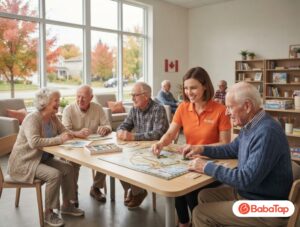
A companion may spend time talking with a senior, accompanying them on errands, helping them stay socially engaged, accompanying them to community activities, or assisting with everyday tasks.
This type of support can be especially valuable for an older adult who lives alone.
Loneliness and lack of social interaction can make everyday life more difficult even when a senior does not require medical assistance. Having a reliable companion can give an older person another source of social connection and practical support.
For families searching online for phrases such as “senior care in home,” “home care for senior,” or “help for elderly parents at home,” companion services may be an overlooked option.
BabaTap is positioned within this non medical companion service category. Rather than replacing nurses, physicians, or other healthcare professionals, the service can support everyday activities such as driving, grocery shopping, light household assistance, and companionship.
This distinction is important.
If a senior needs medical treatment or professional personal care, the family should seek an appropriately qualified healthcare provider. If the senior primarily needs practical help and companionship, a companion service may be a better fit.

3. Non Medical Senior Assistance
Another alternative is to look specifically for non medical senior assistance.
The term “home care” can sometimes make families think primarily about bathing, dressing, medication management, nursing, or other healthcare related services.
However, many older adults need something different.
They may need someone to:
Help with grocery shopping
Drive them to an appointment
Pick up household supplies
Assist with light housekeeping
Accompany them to community activities
Help organize everyday errands
Provide friendly companionship
Accompany them while they complete tasks
These services can help seniors remain at home while preserving as much independence as possible.
In British Columbia, Better at Home specifically focuses on non medical, day to day needs for older adults. The program identifies services such as friendly visiting, transportation, light housekeeping, grocery shopping, and other forms of practical assistance, although specific services vary by community.
For families in Richmond, this can be an important part of a broader support plan.
4. Community Senior Programs in Richmond
Full time care is not the only way to support an older adult.
Community participation can also play an important role in healthy aging.
The City of Richmond offers programs and services for adults aged 55 and older across multiple community facilities. The Minoru Centre for Active Living includes a Seniors Centre, while other Richmond community centres provide activities and programs for older adults.
These programs can give seniors opportunities to socialize, exercise, participate in activities, learn new skills, and maintain connections within their community.
For an older adult who is physically capable but spends too much time alone, regular community activities may reduce the need for constant in home supervision.
Of course, community programs do not replace professional healthcare when healthcare is required. Instead, they can become one component of a larger aging in place strategy.
A senior might receive professional care when necessary, use a companion service for transportation and errands, attend community programs during the week, and receive family visits on weekends.
That combination may provide more independence than full time home care alone.
5. Better at Home and Community Based Assistance
Families searching for alternatives to full time home care in Richmond should also investigate community based support.
Better at Home is a British Columbia program administered by United Way British Columbia Healthy Aging. It supports older adults with simple non medical tasks so they can continue living independently and remain connected to their communities.
The type of assistance available depends on the local provider and community.
This model is particularly relevant to seniors who do not need medical treatment but find certain everyday tasks increasingly difficult.
For example, grocery shopping may become challenging because of transportation limitations. Cleaning may become more tiring. Driving may become uncomfortable or unavailable. Social activities may become harder to attend without assistance.
These problems do not necessarily mean that the senior needs a full time caregiver.
They may simply indicate that additional support should be added to specific parts of the week.
Richmond Cares, Richmond Gives is another important local community organization identified by the City of Richmond as providing services for seniors and caregivers, including grocery and prescription shopping and delivery, information and referral support, social prescribing, housing navigation, caregiver support, and Better at Home services.
For families, this highlights an important principle: the best alternative to full time home care may be a combination of smaller services rather than one large service.
6. Family Care Combined With Professional Support
Many families naturally want to help an aging parent themselves.
An adult child may visit after work, prepare meals on weekends, handle paperwork, or take a parent shopping.
However, family caregivers also have jobs, children, relationships, and personal responsibilities.
Trying to provide every type of support can eventually become difficult.
A hybrid arrangement may be more sustainable.
For example, a daughter may handle medical appointments and financial matters while a companion helps with transportation and errands during the week. Another family member might visit on weekends.
This creates a shared support network.
Fraser Health also provides caregiver support services for eligible clients and families, including assistance from caregiver support clinicians.
The goal is not necessarily to eliminate family involvement.
Instead, it is to make family involvement more manageable.
7. Transportation Assistance for Seniors
Transportation is one of the most common reasons families begin searching for senior home care.
A senior may be perfectly capable of living independently but no longer drive safely or comfortably.
The problem then becomes practical.
How will they get to the doctor?
How will they go grocery shopping?
How will they attend a community event?
How will they visit friends?
Transportation assistance can solve some of these problems without requiring full time home care.
A senior companion may provide transportation or accompany the senior while completing an errand, depending on the service arrangement and applicable requirements.
Better at Home also identifies transportation to appointments among the types of support that may be available in participating communities.
This is a good example of why families should identify the exact problem before choosing a care model.
If transportation is the primary issue, a transportation or companion solution may be more appropriate than paying for continuous in home care.
8. Light Housekeeping and Household Assistance
Household chores can become more difficult with age.
Vacuuming, changing bedding, organizing rooms, taking out garbage, doing laundry, or shopping for groceries may require more physical effort than before.
Yet needing help with these tasks does not automatically mean a senior requires medical home care.
Light housekeeping and household assistance can fill this gap.
For example, a senior might remain completely independent with personal care but appreciate assistance with cleaning once or twice a week.
This type of arrangement can help the senior maintain a comfortable home while reducing the physical demands of household maintenance.
It can also give family members peace of mind.
Instead of spending an entire weekend cleaning their parent’s home, an adult child can focus on spending meaningful time together.
The difference between “care” and “support” is important here.
A senior may not need someone to provide care throughout the day. They may simply need assistance with tasks that have become inconvenient or physically demanding.

9. Grocery Shopping and Errand Assistance
Grocery shopping is another area where seniors may need occasional assistance.
Carrying bags, driving to stores, navigating crowded supermarkets, and transporting groceries home can be challenging.
Some older adults may also need help picking up prescriptions, household supplies, or other everyday items.
Errand assistance can provide a highly targeted solution.
Rather than arranging full time home care, families can look for services that specifically address these tasks.
This can be particularly useful for seniors who want to maintain control over their daily lives.
They can still decide what groceries to buy, what activities to attend, and how they want to spend their time. The support simply makes those activities easier to complete.
10. Adult Day Programs
Another alternative to continuous in home supervision is an adult day program.
Adult day programs can provide structured activities, social connection, exercise, wellness support, and opportunities for seniors to spend time outside the home.
Fraser Health describes its Day Program for Older Adults as providing social connection, activities, exercise, and health checks for seniors with health challenges who want to remain as independent as possible. The program can also provide respite and wellness support for caregivers.
For some families, this type of program can reduce the amount of time an older adult spends alone while giving family caregivers time to work or manage other responsibilities.
It can therefore become part of a broader care arrangement rather than requiring full time home care.
11. Technology and Safety Support at Home
Technology can also complement other senior support services.
Some seniors benefit from personal emergency response systems, monitoring technology, medication reminders, or other tools designed to increase safety at home.
Fraser Health’s Well Connected at Home program, for eligible individuals in its service region, uses technology such as personal alert pendants, home sensors, and medication dispensers to help support independence and connection with care teams.
Technology should not be viewed as a replacement for human support.
Instead, it can complement family visits, professional care, companion services, and community programs.
For example, a senior may live alone with regular companion visits while also having an appropriate emergency response system.
This combination can provide additional reassurance without requiring someone to remain in the home all day.
12. Assisted Living as an Alternative
For some older adults, the challenge may not be the need for a caregiver at home.
The bigger issue may be that maintaining a private home has become increasingly difficult.
In such cases, assisted living may be worth considering.
Assisted living can provide a residential environment with support while allowing residents to maintain a degree of independence.
Fraser Health’s Home and Community Care system includes assisted living among the services that may be assessed through community health professionals.
This option is different from full time home care because the senior moves into a setting designed around supportive living rather than receiving continuous care in their existing home.
Whether this is appropriate depends on the person’s needs, preferences, finances, eligibility, and available options.
13. Long Term Care for Higher Care Needs
Full time home care is also not necessarily the right answer when an older adult requires complex, continuous supervision.
In some situations, long term care may become more appropriate.
Fraser Health explains that long term care is intended for adults who can no longer care for themselves or be cared for safely in their current home or situation and who have complex care needs requiring access to 24 hour supervision.
This is an important distinction.
A companion service is not a substitute for nursing care, personal care delivered by qualified healthcare workers, or 24 hour clinical supervision.
Families should evaluate the senior’s actual care requirements before choosing a service.
If the need involves medical treatment, medication management, wound care, complex mobility support, or other professional healthcare needs, the appropriate healthcare provider should be involved.
Fraser Health’s Home Support Services include personal care assistance and other supports for eligible clients, while community health professionals assess eligibility for appropriate services.
How to Decide Which Alternative Is Right for a Senior in Richmond
Choosing an alternative to full time home care becomes easier when the family breaks the situation into specific needs.
Start by asking what the senior can still do independently.
Can they bathe and dress without assistance?
Can they prepare meals?
Can they safely move around the home?
Can they manage their medications according to their healthcare plan?
Can they drive?
Can they shop for groceries?
Can they keep their home reasonably clean?
Can they attend appointments independently?
Do they spend too much time alone?
The answers will reveal where support is actually needed.
For example, a senior who manages personal care independently but cannot drive may benefit primarily from transportation and companion assistance.
A senior who manages most activities but struggles with cleaning may need occasional household assistance.
A senior who is physically independent but socially isolated may benefit from companionship and community programs.
A senior who needs assistance with bathing, dressing, mobility, or medication related care may require a more formal home support arrangement.
The goal is to match the service with the need.
A Practical Combination of Senior Support Services
Families do not necessarily have to choose between “no help” and “full time home care.”
A more flexible model can combine several forms of assistance.
For example, a Richmond senior might have the following weekly arrangement:
Family visits on weekends
A companion for transportation and errands during the week
Light housekeeping once a week
Community activities through a Richmond community centre
Grocery assistance when needed
Professional healthcare services when medically appropriate
Technology for additional safety at home
This type of arrangement can support aging in place while preserving independence.
It can also change over time.
If the senior becomes less independent, the family can increase the amount of professional support.
If their needs remain stable, they may continue using only occasional assistance.

Why Companion Services Can Be an Important Alternative
One of the biggest gaps in the senior care market is the space between complete independence and medical care.
Many older adults fall into this middle category.
They do not need a nurse.
They may not need a personal care worker every day.
They simply need another person to help them manage everyday life.
That may include driving, shopping, household assistance, errands, or companionship.
This is where BabaTap can be relevant.
BabaTap is designed around companion services for seniors rather than medical treatment. Its role is to provide practical, everyday support that can help older adults continue participating in their normal routines.
For families searching “Home Care for Senior Services,” “senior care in home,” “help for elderly parents,” “senior companion services,” or “non medical home care,” understanding this distinction can make the search more productive.
The objective is not to label every form of senior assistance as healthcare.
The objective is to identify what the older adult actually needs and then find the appropriate type of support.
Home Care in Richmond Does Not Have to Mean Full Time Care
The question Home Care in Richmond : What Are the Alternatives to Full-Time Home Care? does not have one universal answer.
For some seniors, part time home support may be enough.
For others, companion services, transportation, household assistance, community programs, adult day programs, or family support may provide the right combination.
For seniors with medical or complex personal care needs, professional services through the appropriate healthcare system may be necessary.
For older adults who can no longer safely remain at home, assisted living or long term care may eventually become appropriate.
The most effective approach is to look beyond the general phrase “home care” and identify the individual tasks creating difficulty.
If the problem is driving, look for transportation support.
If the problem is loneliness, consider companionship and community activities.
If the problem is groceries, explore shopping assistance.
If the problem is housekeeping, consider light household support.
If the problem is personal care or medical needs, involve qualified healthcare professionals.
This approach can help families create a support plan that is more flexible, personalized, and aligned with the senior’s actual level of independence.
Frequently Asked Questions About Alternatives to Full Time Home Care in Richmond
What are the alternatives to full time home care for seniors?
Alternatives can include part time home support, companion services, transportation assistance, grocery shopping, light housekeeping, adult day programs, family caregiving, community senior programs, assisted living, and appropriate professional healthcare services.
Is companion care the same as medical home care?
No. Companion care is generally focused on non medical assistance, companionship, errands, transportation, and everyday support. Medical home care may involve professional healthcare services or personal care based on an individual’s assessed needs.
Can a senior living alone receive only a few hours of help?
Yes. The appropriate amount of support depends on the person’s needs. A senior who remains largely independent may only need occasional assistance with transportation, errands, housekeeping, or companionship.
Where can Richmond families find senior community programs?
The City of Richmond provides programs and services for adults 55 and older through multiple community facilities, including the Seniors Centre at Minoru Centre for Active Living.
Does Fraser Health provide home support in Richmond?
Fraser Health provides home and community care services in its region, including home support for eligible clients. Services may include personal care and other supports, with eligibility and costs determined through the applicable assessment process.
Is Better at Home a medical home care service?
Better at Home is focused on non medical support for older adults. Available services vary by community and can include practical assistance such as transportation, friendly visiting, light housekeeping, and grocery shopping.
Final Thoughts
Finding the right support for an aging parent does not always mean arranging full time home care.
Many seniors in Richmond can continue living independently when their families identify the specific challenges they face and provide targeted assistance where it matters most.
A senior who needs help getting to appointments may need transportation.
Someone who struggles with grocery shopping may need an errand companion.
An older adult who feels isolated may benefit from companionship and community activities.
A senior who has difficulty maintaining the home may need light housekeeping assistance.
Someone with medical or personal care requirements may need professional home support through the appropriate healthcare system.
The key is to match the solution to the need.
For families researching Home Care for Senior Services, understanding the difference between medical care, personal support, companion services, transportation, household assistance, and community resources can make the decision much clearer.
In Richmond, the availability of healthcare, municipal, community, and non medical support options means families can explore a range of solutions instead of assuming that full time home care is the only choice.
For seniors who remain independent but need practical help with everyday activities, a flexible companion service such as BabaTap can be one part of a broader aging in place strategy.
The ultimate goal is simple: help older adults remain safe, connected, active, and independent for as long as it is appropriate, while giving families a realistic and sustainable way to provide support.
Choose the support that fits your needs. BabaTap provides flexible, non-medical companion and everyday support services for older adults, available by the hour in Richmond. Friendly visits, conversation and emotional support. Safe rides to appointments, shopping and errands. Help with groceries, errands and everyday essentials. Friendly check-ins for comfort, connection and reassurance. Fresh, simple meal preparation and everyday kitchen support. Light housekeeping and help keeping the home organized. Companion support during hospital visits and care waits. Companionship for walks and light activity to stay active. Flexible non-medical support for everyday life at home. Meaningful companionship and non-medical senior support. BabaTap focuses on flexible, non-medical senior support. Service availability may vary by city and BabaTap provider.BabaTap Services by the Hour in Richmond

Friendly Companion

Transportation

Grocery & Errands

Check-in Visits

Meal Preparation

Light Home Support

Hospital Companion

Walk & Exercise

Home Care

Companion Care
Bài viết liên quan: