
Best Medical Transportation Services for Seniors in Hamilton. For many older adults, getting to a medical appointment in Hamilton is not simply a matter of finding a ride. Seniors may need extra time, physical support, mobility assistance, a vehicle that can accommodate a walker or wheelchair, and a driver who understands the importance of patience and respectful communication. This is why choosing the Best Medical Transportation Services for Seniors can make an important difference in maintaining access to healthcare, preserving independence, and reducing the stress associated with medical travel. Hamilton, Ontario, is home to a broad healthcare network that includes Hamilton Health Sciences and St. Joseph’s Healthcare Hamilton, with major healthcare locations serving patients across the city and surrounding communities. Hamilton Health Sciences includes facilities such as Hamilton General Hospital, Juravinski Hospital and Cancer Centre, McMaster University Medical Centre, and St. Peter’s Hospital, while St. Joseph’s Healthcare Hamilton operates several campuses serving different medical needs. For seniors who no longer drive, have difficulty using conventional public transportation, or simply need a more supportive travel experience, dependable medical transportation can help make appointments easier to manage. Hamilton also provides Accessible Transportation Services through DARTS for eligible residents whose physical or functional limitations or health conditions prevent them from using regular fixed route public transit. The service provides shared ride transportation between accessible building entrances, while other transportation options may be appropriate when a senior needs more personalized assistance. Understanding the available choices is therefore important for families, caregivers, and older adults looking for reliable transportation for medical appointments, rehabilitation visits, diagnostic testing, specialist consultations, dialysis, therapy, and follow up care. The right service should combine safety, accessibility, punctuality, comfort, professionalism, and compassionate support.

Why Medical Transportation Matters for Seniors in Hamilton
Medical appointments are an essential part of healthy aging. Seniors may have appointments with family physicians, specialists, physiotherapists, occupational therapists, cardiologists, neurologists, oncologists, dentists, or other healthcare professionals.
For some older adults, driving is no longer comfortable or practical. Vision changes, reduced reaction time, mobility limitations, medication schedules, fatigue, or concerns about parking can make independent driving difficult. At the same time, asking family members for transportation every time an appointment is scheduled may not always be possible.
Reliable senior medical transportation provides another option.
A professional transportation service can help seniors travel from their home, retirement residence, assisted living community, or other location to a medical facility and return home afterward. Depending on the provider, transportation may include assistance entering and exiting the vehicle, waiting for the passenger, helping with mobility equipment, or providing an escort.
This type of service can be particularly valuable when appointments are frequent.
A senior receiving ongoing treatment may need transportation several times a month or even several times a week. Consistent transportation reduces the burden on family caregivers while helping the senior maintain a predictable healthcare routine.
What Makes the Best Medical Transportation Services for Seniors Different?
The phrase Best Medical Transportation Services for Seniors should represent more than simply a vehicle that arrives at an address.
A quality service understands that older adults may have different physical, emotional, and transportation needs.
1. Senior Focused Drivers
Drivers working with older adults should demonstrate patience, courtesy, and awareness.
A senior may need additional time to walk from the front door to the vehicle. Someone using a walker may need help positioning the mobility device safely. A passenger with limited hearing may need information communicated clearly and calmly.
A professional driver should never make an older passenger feel rushed.
Respectful communication is especially important when transportation involves medical appointments, because seniors may already be experiencing anxiety about their health.
2. Accessible Transportation
Accessibility is one of the most important considerations when choosing medical transportation in Hamilton.
A senior may use a cane, walker, wheelchair, or mobility scooter. Transportation providers should clearly explain what types of mobility equipment their vehicles can accommodate.
Hamilton’s public transportation system also provides accessible options. The City of Hamilton states that its Accessible Transportation Services are intended for people with physical or functional limitations or health conditions that prevent them from using regular HSR buses. Eligible passengers can access shared ride transportation through DARTS.
However, DARTS is a shared ride service, so it may not provide the same experience as a private medical transportation company.
Families should therefore evaluate the senior’s specific needs before choosing a transportation option.
3. Door to Door Assistance
Many seniors benefit from transportation that goes beyond curbside pickup.
Door to door assistance can make a significant difference for an older adult who has difficulty walking long distances.
For example, a senior may live in a condominium building with a long hallway between the elevator and entrance. Another passenger may need help getting from a residential doorway to the vehicle.
The level of assistance should always be clearly explained before booking.
Hamilton’s DARTS service provides assistance between vehicles and accessible entrances, but the City notes that drivers do not provide onboard care or assistance beyond the accessible entrance of the destination. A support person may be necessary when a passenger needs additional help.
This distinction is important for families comparing different transportation services.
4. Reliable Scheduling
Medical appointments often operate on strict schedules.
Arriving late may mean missing a consultation, delaying treatment, or having to reschedule an appointment that took weeks to obtain.
Reliable transportation should therefore focus on accurate scheduling and realistic travel times.
When booking, families should provide the exact appointment time, destination, pickup address, mobility requirements, and expected return arrangements.
For longer appointments, it is also useful to ask how the return trip will be handled.
Some transportation providers may wait for the passenger. Others may schedule a separate return trip.
Understanding these details before the appointment can prevent unnecessary stress.
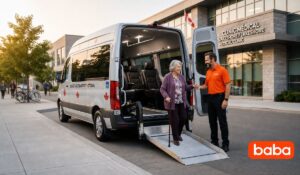
Medical Transportation to Hamilton Hospitals
Hamilton has an extensive healthcare network, which means seniors may need to travel to different hospitals and medical campuses depending on their condition.
Hamilton General Hospital is one of the major healthcare destinations in the city.
Juravinski Hospital and Cancer Centre is another important destination for patients receiving specialized treatment and cancer related care.
St. Peter’s Hospital also serves patients with specialized healthcare needs.
Hamilton Health Sciences identifies these facilities among its healthcare sites.
For patients receiving treatment at different locations, transportation planning becomes especially important.
A senior may have an appointment at a hospital in the morning and a diagnostic test at another facility later the same day. A transportation provider familiar with Hamilton can help families plan the schedule more efficiently.
St. Joseph’s Healthcare Hamilton also operates several campuses. Its Charlton Campus is an acute care facility in downtown Hamilton, while the West 5th Campus provides specialized mental health and addiction services along with medical care. Its King Campus is an outpatient facility with services including eye care, cataract surgery, dialysis, and other programs.
This variety of healthcare destinations highlights why transportation should be planned around the senior’s exact appointment location rather than simply the name of the healthcare organization.
Transportation for Geriatric Appointments
Older adults may require specialized geriatric care that focuses on age related health concerns.
St. Joseph’s Healthcare Hamilton’s King Campus provides geriatric medicine services for older adults with age related disorders, including specialized assessment and medical care across inpatient and outpatient settings.
Transportation to geriatric appointments may require additional consideration.
Some seniors experience reduced balance, memory challenges, fatigue, or difficulty navigating unfamiliar environments. A transportation provider that understands these needs can help create a more comfortable experience.
Families should communicate relevant transportation requirements before the trip.
For example, they may need to explain that the passenger uses a walker, requires extra time to enter the vehicle, or should not be left unattended at the destination.
Clear communication allows the transportation provider to determine whether the requested level of assistance is appropriate.
Medical Transportation for Dialysis
Dialysis appointments are another situation where dependable transportation can be particularly important.
Patients receiving regular dialysis may have appointments several times each week. Missing or arriving late to treatment can create unnecessary complications.
St. Joseph’s Healthcare Hamilton identifies dialysis among the core services associated with its King Campus.
For dialysis patients, transportation planning should focus on consistency.
A family may benefit from arranging recurring trips instead of booking each ride individually. This can make the schedule easier to manage and reduce the possibility of forgetting an appointment.
Because dialysis can leave patients tired, transportation after treatment should also prioritize comfort and a calm travel environment.

Transportation for Cancer Treatment
Cancer treatment may involve repeated appointments, testing, consultations, chemotherapy, radiation related care, or follow up visits.
Patients receiving care through Juravinski Hospital and Cancer Centre may need regular transportation throughout their treatment journey.
A medical transportation provider can become an important part of the patient’s support network by helping make travel predictable.
For cancer patients, comfort can be especially important. Treatment may cause fatigue or weakness, making conventional transportation more difficult.
Families should ask whether the vehicle provides sufficient space for mobility equipment and whether the driver can provide the level of assistance required.
Transportation for Rehabilitation and Therapy
Rehabilitation appointments can include physiotherapy, occupational therapy, speech therapy, or other services.
A senior recovering from surgery, injury, stroke, or another medical event may have difficulty walking or standing for long periods.
Regular transportation can support continued participation in rehabilitation.
This is particularly important because missing appointments can interrupt progress.
A comfortable vehicle, sufficient time for boarding, and a driver who understands mobility challenges can make the journey less stressful.
Why Families Choose Private Medical Transportation
Public transportation can be useful for seniors who are comfortable traveling independently.
Hamilton’s accessible low floor buses are designed to make boarding easier for passengers using wheelchairs, scooters, walkers, and other mobility devices.
However, not every senior is comfortable navigating a bus route, transferring between services, walking to a stop, or managing a mobility device in a busy environment.
Private transportation can offer greater personalization.
Depending on the provider, families may receive a scheduled pickup, direct transportation to the destination, assistance with boarding, and a more private travel environment.
The primary advantage is that the transportation plan can be built around the passenger rather than the passenger having to adapt to a fixed public transit schedule.
How to Choose Medical Transportation for an Older Adult
Choosing transportation for a senior should involve more than comparing prices.
Families should consider the passenger’s physical needs, medical schedule, mobility equipment, communication preferences, and level of independence.
Here are several factors worth reviewing before booking.
Vehicle Accessibility
Ask whether the vehicle can safely accommodate the senior’s mobility equipment.
If the passenger uses a wheelchair, determine whether the wheelchair can remain in place during travel or whether the passenger must transfer to a seat.
If the passenger uses a walker, ask whether there is sufficient storage space.
Never assume that every accessible transportation provider offers the same equipment or level of support.
Driver Experience
Ask about driver training and experience with senior passengers.
A driver transporting older adults should understand that passengers may require more time and assistance.
Professionalism matters from the moment the driver arrives.
A good experience should include respectful communication, safe driving, appropriate assistance, and attention to the passenger’s comfort.
Pickup and Drop Off Procedures
Clarify exactly where the driver will meet the passenger.
For example, will the driver come to the front door, building entrance, lobby, or curb?
This is especially important for seniors living in retirement communities, apartment buildings, or assisted living residences.
A clearly defined pickup procedure helps prevent confusion.
Appointment Timing
Medical appointments can involve delays.
A consultation scheduled for 10:00 a.m. may not finish exactly at 10:30 a.m.
Before booking, ask how the transportation company handles uncertain return times.
Some services may offer waiting arrangements. Others may use a call back system or schedule a return trip after the appointment.
Hamilton’s DARTS service, for example, allows passengers attending medical appointments to request a call return when they cannot provide a specific return time, although the City notes that the return may involve an extended wait depending on vehicle availability.
Private transportation providers may have different policies, so families should confirm them in advance.

Transportation for Seniors Using Wheelchairs
Wheelchair accessibility requires careful planning.
A wheelchair passenger may need a vehicle designed specifically for accessible transportation.
Families should ask about:
- Wheelchair capacity
- Vehicle dimensions
- Securement systems
- Ramp or lift availability
- Passenger transfer requirements
- Driver assistance
- Maximum mobility device dimensions
Hamilton’s DARTS vehicles accommodate mobility devices within specified dimensions and have requirements for passenger safety equipment such as lap belts and footrests.
Private providers may have different vehicle specifications.
Therefore, providing accurate mobility information when making a reservation is essential.
Transportation for Seniors Using Walkers
Not every senior who needs accessible transportation uses a wheelchair.
Walkers are extremely common among older adults, particularly those recovering from illness, surgery, or injury.
A transportation service should have a safe place to store the walker during the journey.
Seniors should not be expected to carry or lift heavy mobility equipment themselves.
Drivers should also allow sufficient time for the passenger to enter and exit the vehicle.
A few additional minutes can make a major difference in comfort and safety.
Transportation for Seniors Living Alone
Older adults who live alone may face additional transportation challenges.
They may have no family member available during business hours. Their children may live in another city or have demanding work schedules.
Reliable transportation can help these seniors remain connected with healthcare services without depending entirely on relatives.
This supports greater independence.
It can also provide peace of mind for adult children who want to know that their parent has a dependable way to attend appointments.
For families, professional transportation is often not about replacing personal support. It is about creating an additional layer of practical assistance.
Transportation for Seniors Living in Retirement Communities
Many Hamilton seniors live in retirement residences or other senior living communities.
Transportation arrangements should account for building access procedures.
Some residences require visitors and drivers to check in with reception. Others have designated pickup areas.
When booking a trip, families should provide the residence name, entrance information, passenger name, and any relevant instructions.
The more accurate the information, the smoother the pickup process can be.

Transportation for Hospital Discharge
Hospital discharge transportation requires special attention.
A senior may be medically ready to leave the hospital but still have difficulty walking, carrying belongings, or getting into a regular car.
Before arranging transportation, families should confirm what level of assistance the patient needs.
They should also determine whether the patient requires a wheelchair accessible vehicle or whether a standard passenger vehicle is appropriate.
If the passenger requires medical monitoring or clinical care during transport, a standard senior transportation service may not be suitable. In such cases, families should follow the healthcare team’s recommendations and arrange an appropriate medical transfer service.
This distinction is important because non emergency senior transportation is not the same as ambulance transportation or clinical patient transfer.
Transportation to Medical Tests and Diagnostic Appointments
Older adults frequently travel for imaging, laboratory tests, diagnostic procedures, and specialist assessments.
These appointments may occur at different healthcare facilities.
A reliable transportation service can help seniors attend these appointments without depending entirely on relatives.
When arranging transportation, families should confirm whether the passenger will need to fast, bring medication, carry paperwork, or use mobility equipment.
Although transportation providers do not provide medical advice, they can help ensure the travel arrangements are organized around the appointment requirements.
Hamilton Accessible Transportation Options
Hamilton residents have several transportation options depending on eligibility and personal needs.
The City’s Accessible Transportation Services determine eligibility for accessible transportation for people whose physical or functional limitations or health conditions prevent them from using regular fixed route public transit.
DARTS provides shared ride transportation between accessible building entrances.
The City also offers a Taxi Scrip Program for eligible residents. The program provides subsidized taxi fares and uses eligibility criteria associated with Accessible Transportation Services.
These programs can be valuable resources for eligible seniors.
However, families should understand the differences between public accessible transportation, subsidized taxi services, private senior transportation, and medical patient transfer services.
Each option is designed for different circumstances.
Comparing DARTS With Private Senior Transportation
DARTS can be a practical option for eligible Hamilton residents who need accessible shared transportation.
The service is designed around accessible transit needs and can provide transportation between accessible entrances.
However, shared transportation means the passenger may travel with other riders and may need to allow additional time.
Private senior transportation may be preferable when a passenger needs a more individualized experience.
For example, a family may prefer private transportation when:
The senior needs a specific pickup time.
The senior prefers a private vehicle.
The passenger needs additional assistance.
The appointment is outside regular transit routes.
The family wants a dedicated return arrangement.
The passenger is uncomfortable traveling with multiple riders.
The decision should be based on the senior’s needs rather than choosing one option universally.
Questions to Ask Before Booking
Before selecting medical transportation, families should ask several practical questions.
Is the vehicle wheelchair accessible?
If the senior uses a wheelchair, confirm the vehicle’s exact accessibility features.
Can the driver assist with boarding?
Clarify what assistance is included and what responsibilities remain with the passenger or caregiver.
Does the service provide return transportation?
Ask whether the return trip is automatically scheduled or needs to be requested separately.
What happens if the appointment runs late?
This is especially important for hospital appointments, specialist consultations, and diagnostic procedures.
Can a family member or caregiver accompany the passenger?
Some seniors feel more comfortable when a trusted person travels with them.
How far in advance should transportation be booked?
Regular medical appointments may be easier to manage when scheduled early.
What happens if the senior cancels?
Understand cancellation policies before making recurring reservations.
Does the service travel outside Hamilton?
Some seniors may need appointments in Burlington, Oakville, Mississauga, Toronto, or other surrounding communities.
Confirm the provider’s service area before booking.
Making Medical Travel More Comfortable
Medical transportation does not need to feel stressful.
Families can make the experience easier by preparing in advance.
Have the senior ready several minutes before pickup.
Keep mobility equipment accessible.
Prepare appointment information.
Bring identification and healthcare documents when needed.
Make sure the passenger has any necessary medication according to their healthcare provider’s instructions.
Dress comfortably, especially if the trip involves waiting.
Provide the driver with clear pickup instructions.
If the senior has difficulty hearing or communicating, explain the preferred communication approach in advance.
These small preparations can make transportation much smoother.
The Importance of Compassionate Transportation
Transportation for seniors should never be treated as simply moving someone from one address to another.
For an older adult, the driver may be one of the first people they interact with on an important medical day.
A friendly greeting can reduce anxiety.
A patient approach can make boarding easier.
A respectful conversation can help a senior feel valued.
These human qualities matter.
The Best Medical Transportation Services for Seniors combine practical transportation with dignity, patience, reliability, and respect.
That combination is especially valuable when the passenger is experiencing illness, recovering from treatment, or dealing with mobility limitations.
Supporting Independence Through Medical Transportation
One of the biggest benefits of dependable transportation is that it can support independence.
A senior who cannot drive should not automatically lose the ability to attend appointments independently.
With the right transportation arrangement, an older adult may continue attending medical appointments, rehabilitation sessions, therapy programs, and other essential services.
This can contribute to confidence and a stronger sense of personal independence.
Transportation can also help caregivers.
Instead of taking time away from work or other responsibilities for every appointment, family members can use professional transportation when appropriate.
This creates a more sustainable support system.
Choosing the Right Service for Your Family
Every senior has different needs.
One passenger may simply need a comfortable ride to a doctor’s office.
Another may require wheelchair accessibility.
Someone else may need regular transportation to dialysis.
A cancer patient may require frequent travel to treatment.
A senior recovering from surgery may need extra time and assistance getting into a vehicle.
Therefore, the best transportation service is not necessarily the most expensive or the most heavily advertised.
It is the service that matches the passenger’s specific needs.
Families should evaluate accessibility, scheduling, driver professionalism, service area, comfort, assistance policies, and overall reliability.
Final Thoughts
Finding the Best Medical Transportation Services for Seniors in Hamilton can make an important difference in how older adults access healthcare. From routine physician appointments and diagnostic testing to rehabilitation, dialysis, cancer treatment, geriatric care, and specialist consultations, dependable transportation can remove many of the practical barriers that seniors and caregivers face.
Hamilton offers several transportation options, including Accessible Transportation Services and DARTS for eligible residents, accessible HSR buses, Taxi Scrip support, and private transportation providers. The City of Hamilton confirms that DARTS provides shared ride transportation between accessible building entrances for eligible passengers, while its accessible buses are designed to accommodate mobility devices such as wheelchairs, scooters, and walkers.
At the same time, private senior transportation may offer additional flexibility for families seeking scheduled, personalized transportation for medical appointments.
When comparing services, focus on the senior’s actual needs. Consider vehicle accessibility, driver experience, pickup procedures, assistance policies, scheduling reliability, return transportation, mobility equipment, and the ability to accommodate caregivers or companions.
Most importantly, medical transportation should preserve dignity.
A senior should feel safe, respected, comfortable, and supported from the moment they leave home until they return.
With thoughtful planning and the right transportation provider, older adults in Hamilton can maintain better access to healthcare while families gain greater confidence that their loved ones have dependable transportation when it matters most.
Bài viết liên quan: