
Best Medical Transportation Services for Seniors in Red Deer. For many older adults, getting to a medical appointment is about much more than finding a vehicle. Reliable transportation can determine whether a senior arrives at a doctor’s appointment on time, receives regular treatment, picks up an important prescription, or completes a follow-up visit after leaving the hospital. In Red Deer, Alberta, seniors and their families have access to several transportation options designed around accessibility, independence, convenience, and personal support. When families search for Best Medical Transportation Services for Seniors, they are often looking for more than a simple ride. They want dependable scheduling, comfortable vehicles, respectful drivers, assistance with mobility needs, and transportation that fits the senior’s individual circumstances. Red Deer is home to important healthcare facilities such as Alberta Health Services and Red Deer Regional Hospital Centre, which serves as a major referral centre for Central Alberta. The hospital provides numerous services, including specialized geriatric services, rehabilitation, outpatient care, diagnostic services, surgical services, and emergency care. For seniors who cannot comfortably drive themselves, transportation can become an important part of maintaining access to healthcare. Options such as Red Deer Transit, Action Bus, senior-focused transportation programs, taxi services, and caregiver-supported transportation can help older adults travel to medical appointments and remain connected with essential services. Understanding how each option works makes it easier for seniors, family members, and caregivers to select transportation based on mobility, appointment schedules, assistance requirements, and personal comfort.
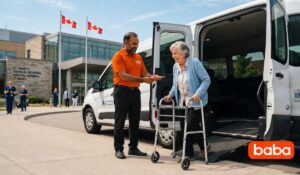
Why Medical Transportation Matters for Seniors in Red Deer
Transportation plays a major role in helping older adults maintain independence. A senior may have a family physician appointment one week, a diagnostic test the next, and a specialist consultation shortly afterward. Some people also need regular physiotherapy, rehabilitation, laboratory testing, cancer treatment, dental appointments, pharmacy visits, or follow-up care.
Without dependable transportation, these routine healthcare responsibilities can become difficult.
Older adults may stop driving because of changing vision, reduced confidence, physical limitations, medication effects, or concerns about winter road conditions. Others may still drive but prefer not to navigate busy roads, unfamiliar medical facilities, or parking areas.
For families, the situation can also create challenges. Adult children may have work commitments, live in another community, or be unable to provide transportation for every appointment. A dependable senior transportation solution can reduce this pressure while giving the older adult greater control over their schedule.
This is why medical transportation should be viewed as part of a broader approach to independent living. The objective is not simply to move someone from one address to another. A good transportation arrangement can help seniors continue accessing healthcare while preserving dignity and confidence.
1. Red Deer Transit Action Bus
One of the most important transportation resources for seniors with qualifying mobility or physical needs is the Action Bus operated by City of Red Deer.
The Action Bus is a door-to-door public transportation service for people who cannot use regular transit because of a physical or cognitive disability. Seniors are among the groups that may use the service, but passengers must be registered clients. The service uses wheelchair-lift-equipped vehicles and operates as shared-ride transportation rather than as a private taxi.
This makes Action Bus particularly relevant for seniors who need accessible transportation to healthcare appointments.
The service can be useful for trips involving:
Doctor appointments
Specialist consultations
Hospital visits
Rehabilitation appointments
Diagnostic testing
Therapy sessions
Other essential healthcare destinations
The door-to-door model can be especially helpful for someone who finds walking long distances difficult.
Action Bus operators can operate ramps and lifts, secure wheelchairs and scooters, assist passengers on and off the vehicle, and help passengers between the vehicle and the first exterior accessible door at the destination. However, the service has specific boundaries. Operators do not enter a person’s residence or assist with climbing more than one step.
Understanding these limitations is important when deciding whether Action Bus is the right choice.
Booking Action Bus for a Medical Appointment
Registered clients can book Action Bus trips up to 14 days in advance, subject to available space. Short-notice bookings may also be accepted when space is available. The City of Red Deer lists 403-309-8400 for bookings.
Families should plan ahead whenever possible, particularly for specialist appointments or treatments that occur at fixed times.
It is also helpful to provide accurate information when arranging the ride. Important details may include the pickup address, appointment location, appointment time, mobility device, accessibility requirements, and whether an attendant will accompany the passenger.
2. Red Deer Transit Accessible Bus Service
Regular Red Deer Transit can also be a practical option for seniors who are able to use conventional public transportation.
The City states that its regular buses are low-floor vehicles designed to improve accessibility. Buses have ramps and can lower the vehicle to accommodate wheelchairs, walkers, and other mobility devices. Space is also reserved for mobility devices.
For a senior who can independently manage a short walk to a bus stop, regular transit may provide an affordable transportation option.
It can be especially useful for:
Routine physician visits
Pharmacy trips
Dental appointments
Community healthcare programs
Short local errands
Non-urgent medical visits
The City also provides MyBus, which offers real-time transit information, departure times, route planning, GPS bus tracking, and service updates.
However, seniors should consider the complete journey rather than only the bus ride itself.
A transportation option may look convenient on a route map but become difficult if the senior must walk several blocks, cross busy intersections, wait outside in cold weather, or navigate stairs at the destination.
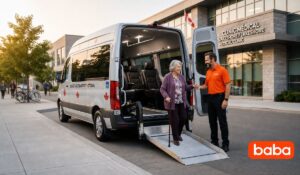
3. Senior Transportation Through Community Resources
Community organizations can also play an important role in helping older adults remain mobile.
The Golden Circle Senior Resource Centre is an established community organization serving older adults, families, and caregivers in Red Deer. Its current programs include resources and outreach services intended to support independent and healthy lifestyles.
The City of Red Deer has also partnered with organizations including the Golden Circle Senior Resource Centre, Family Services of Central Alberta, and the Alberta Motor Association in developing its Seniors’ Transportation Information Guide.
This type of community resource can be valuable for families who are unsure which transportation option fits their circumstances.
A senior may not necessarily need a specialized medical vehicle. Instead, they may need a community transportation resource, an accessible taxi, or a caregiver who can provide transportation and accompany them into an appointment.
4. Private Senior Transportation With Caregiver Support
Private senior transportation can be particularly useful when an older adult needs assistance beyond the actual drive.
For example, a senior may need help leaving the house, getting into a vehicle, walking into a clinic, checking in at reception, waiting for an appointment, and returning home.
A service such as Comfort Keepers offers senior transportation in Red Deer for medical appointments, follow-up visits, errands, social activities, and other destinations. Its local service information states that caregivers can provide transportation support and may accompany seniors during appointments and help with activities around the trip.
This distinction is important.
Traditional transportation usually focuses on the ride itself. Caregiver-supported transportation can combine transportation with companionship and practical assistance.
For seniors who become anxious when attending appointments alone, this can be a major advantage.
Caregiver-supported transportation may be appropriate for:
Medical appointments
Hospital discharge transportation
Specialist visits
Therapy appointments
Prescription pickup
Diagnostic testing
Post-hospital follow-up visits
Medical errands
The exact level of assistance should always be confirmed before booking.
5. Accessible Taxi and Wheelchair Transportation
Accessible taxi services may provide another option for seniors who need more flexibility than a fixed-route bus.
The City of Red Deer Seniors’ Transportation Information Guide identifies local taxi resources and notes that some providers offer wheelchair-accessible vehicles and senior discounts.
This type of transportation may be useful when an appointment occurs outside normal public transit hours or when a senior needs a direct trip between home and a clinic.
Private taxi transportation can also reduce the number of transfers involved in a medical journey.
For example, instead of walking to a bus stop, taking one bus, transferring to another route, and walking to the healthcare facility, a direct vehicle can provide a simpler journey.
Families should ask about wheelchair access, walker storage, assistance policies, booking requirements, and whether the vehicle can accommodate the specific mobility device.
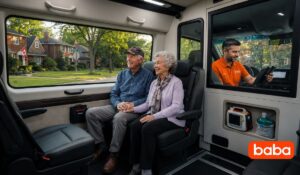
What Makes a Good Medical Transportation Service for Seniors?
Choosing among Best Medical Transportation Services for Seniors requires looking beyond price.
A service can be affordable but unsuitable if it cannot accommodate a wheelchair. Another option may have accessible vehicles but provide no assistance beyond the curb. A third option may offer personal support but require advance booking.
The best choice depends on the individual.
Accessibility
The first consideration is accessibility.
Can the vehicle accommodate a wheelchair, walker, scooter, or other mobility aid?
Does the passenger need a lift or ramp?
Can the driver assist with entering and exiting the vehicle?
Does the service accommodate an accompanying caregiver?
These questions should be answered before the appointment date.
Reliability
Medical appointments often involve strict schedules. Missing a specialist appointment can mean waiting weeks or months for another opening.
Reliable transportation should have a clear booking process and provide reasonable communication regarding pickup times.
Door-to-Door Support
Door-to-door service can make a major difference for seniors with limited mobility.
However, families should understand what “door-to-door” means for each provider. Action Bus, for example, has specific rules about how far operators can assist passengers and does not enter residences.
Comfort
Medical appointments can already be stressful. Comfortable transportation can help make the overall experience easier.
A senior may benefit from:
A clean vehicle
Comfortable seating
Adequate space for mobility equipment
A calm driver
Reasonable travel time
A direct route
Supportive communication
Appointment Coordination
For recurring medical appointments, transportation should ideally be easy to schedule repeatedly.
This is particularly valuable for seniors receiving ongoing therapy, rehabilitation, specialist care, or regular treatment.
Medical Transportation to Red Deer Regional Hospital Centre
The Red Deer Regional Hospital Centre is an important destination for senior medical transportation.
Alberta Health Services identifies it as the only regional referral centre for the Central Zone, serving more than 450,000 people across a large area of Central Alberta. The facility includes the Central Alberta Cancer Centre and offers a broad range of healthcare services.
The hospital is located at 3942 50A Avenue in Red Deer.
Its services include specialized geriatric services, rehabilitation, diagnostic imaging, surgical services, outpatient programs, stroke services, cardiac services, and many other medical programs.
Because the hospital serves such a broad region, transportation planning can be especially important for seniors traveling from Red Deer County and surrounding communities.
Before arranging transportation, families should confirm the exact hospital entrance, clinic department, appointment time, accessibility needs, and whether the passenger needs someone to accompany them inside.
Central Alberta Cancer Centre Transportation Needs
Cancer treatment can require repeated trips and careful scheduling.
The Central Alberta Cancer Centre is located at the Red Deer Regional Hospital Centre.
For seniors attending cancer-related appointments, transportation may become a recurring requirement rather than a one-time trip.
Families should consider a transportation solution that can support:
Repeated appointments
Early morning appointments
Treatment-day transportation
Return trips home
Prescription pickup
Follow-up appointments
Companion support
Because treatment schedules can change, it is helpful to discuss flexibility and cancellation policies with the transportation provider before beginning a recurring schedule.
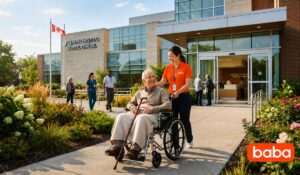
Choosing Transportation Based on Mobility Needs
Not every senior requires the same transportation arrangement.
An older adult who walks independently may be comfortable using regular transit or a taxi.
A senior using a walker may need an accessible vehicle and extra time entering and leaving the vehicle.
A wheelchair user may require a ramp or lift.
A senior with cognitive challenges may need a caregiver or trusted companion throughout the trip.
Someone returning home after hospitalization may require more support than usual.
Therefore, families should evaluate the senior’s complete mobility profile rather than choosing transportation based only on distance or cost.
Transportation for Hospital Discharge
Returning home after a hospital stay can be one of the most important times to arrange transportation carefully.
A senior may be tired, temporarily weak, or using new mobility equipment. They may also have prescriptions, discharge instructions, or follow-up appointments.
A simple ride home may not be enough.
Caregiver-supported transportation can be useful when the senior needs help transitioning from the facility to the vehicle and then into the home.
Comfort Keepers, for example, describes transportation support for post-hospital transitions and follow-up appointments as part of its senior care services.
Families should always confirm the provider’s specific policies regarding medical equipment, mobility assistance, and post-discharge transportation.
Planning Ahead Makes Medical Transportation Easier
The earlier transportation is arranged, the more choices families typically have.
For routine appointments, booking several days ahead can make scheduling easier. Action Bus clients can book eligible trips up to 14 days in advance, subject to availability.
A useful planning checklist includes:
Appointment date
Appointment time
Healthcare facility
Clinic or department
Pickup address
Return address
Mobility device
Need for wheelchair access
Need for an attendant
Need for waiting assistance
Expected appointment duration
Special instructions
Emergency contact information
Keeping these details organized can reduce last-minute confusion.
6. Transportation for Recurring Medical Appointments
Some seniors need transportation only occasionally, while others require regular rides.
Recurring healthcare needs may include:
Physiotherapy
Occupational therapy
Rehabilitation
Specialist consultations
Diagnostic testing
Cancer treatment
Cardiology appointments
Diabetes care
Post-surgery follow-up
Hearing appointments
Vision appointments
Dental care
When appointments occur every week or every few weeks, transportation becomes part of the senior’s regular routine.
Families should look for a service that can accommodate recurring bookings and provide consistent communication.
Consistency matters because seniors may feel more comfortable when they know how transportation works and what to expect.
For recurring appointments, families can ask:
Can rides be scheduled in advance?
Is recurring transportation available?
How much notice is required?
What happens if the appointment changes?
Can the same transportation provider be requested?
Can a family member accompany the senior?
Can the service accommodate a walker or wheelchair?
These questions can help prevent problems later.
7. Transportation for Physiotherapy and Rehabilitation
Rehabilitation appointments often require multiple visits.
A senior recovering from surgery, injury, stroke, or mobility-related challenges may need transportation several times per week.
The Red Deer Regional Hospital Centre provides rehabilitation-related services, and Alberta Health Services also identifies specialized geriatric services for eligible adults aged 65 and older with needs involving medical complexity, frailty, chronic disease, functional decline, cognitive impairment, dementia, delirium, or falls.
For these situations, transportation should be evaluated based on the senior’s physical condition on the day of travel.
A person may be able to walk short distances at home but struggle after a therapy session.
This means the return journey can be just as important as the trip to the appointment.
A good transportation plan should account for both directions.
8. Transportation for Seniors With Wheelchairs
Wheelchair transportation requires more planning than a standard vehicle ride.
Before booking, families should determine:
Whether the wheelchair is manual or powered
Whether the senior remains seated in the wheelchair during transportation
Whether the vehicle has a lift or ramp
Whether the wheelchair can be secured safely
Whether the vehicle has enough interior space
Whether an attendant can travel with the passenger
Whether the service provides assistance entering the destination
Red Deer Transit states that its low-floor buses have ramps and designated space for mobility devices.
Action Bus also uses wheelchair-lift-equipped vehicles and has procedures for securing wheelchairs and scooters.
However, transportation providers differ considerably, so families should never assume that a standard taxi or private vehicle can accommodate every wheelchair.
Providing accurate mobility information during booking helps the transportation provider assign an appropriate vehicle.
9. Transportation for Seniors Using Walkers
Walkers are common among older adults, but they can create transportation challenges.
A senior may need a vehicle with enough trunk space to store a folded walker.
The driver may also need to park close to the entrance so the senior does not have to walk a long distance.
For a senior using a walker, families should consider:
Vehicle entry height
Door opening size
Storage capacity
Parking distance
Weather conditions
Walking distance at the healthcare facility
Need for an escort
Waiting time
A short trip can become exhausting if the senior must walk from a distant parking location into a large medical building.
For this reason, transportation should be evaluated as a complete door-to-door experience.
10. Private Senior Transportation With Personal Assistance
Private transportation can be a useful alternative when an older adult needs more personalized support.
Some seniors do not simply need transportation. They may need someone to accompany them.
For example, a senior attending a specialist appointment may need help:
Leaving the home
Entering the vehicle
Entering the clinic
Checking in
Waiting for the appointment
Remembering instructions
Returning to the vehicle
Getting home safely
Services such as Comfort Keepers in Red Deer describe transportation assistance for appointments, errands, community activities, and post-hospital needs. The company also describes caregiver support that can extend beyond the ride itself.
This can be particularly useful for families who cannot attend every appointment themselves.
However, families should confirm whether the service is providing transportation, companionship, personal care, or a combination of services.
What Questions Should You Ask Before Booking?
Before choosing among Best Medical Transportation Services for Seniors, ask detailed questions.
Is the Vehicle Accessible?
If the senior uses a wheelchair, walker, or scooter, confirm vehicle compatibility.
Do not rely only on phrases such as “accessible vehicle.” Ask what type of accessibility equipment is available.
Does the Driver Help the Senior?
Some transportation services provide only transportation.
Others may assist with getting into and out of the vehicle.
Some caregiver-supported services may also accompany the senior into the healthcare facility.
Understanding this distinction is essential.
Can a Family Member Accompany the Senior?
An accompanying person may be necessary for seniors with cognitive, physical, or communication challenges.
Confirm whether an attendant can travel and whether additional fees apply.
For Action Bus, the City of Red Deer provides an attendant program for qualifying passengers who need personal assistance accessing public transit.
How Far in Advance Should You Book?
Medical transportation is easier to arrange when families plan ahead.
Action Bus allows eligible registered clients to book up to 14 days in advance, while short-notice bookings depend on available space.
Private services may have different scheduling policies.
What Happens if the Appointment Runs Late?
Medical appointments do not always finish on schedule.
Ask whether the driver waits for the senior, whether a separate return ride is required, and whether waiting time creates additional charges.
This question is particularly important for hospital appointments and specialist consultations.
Understanding Transportation Costs
Transportation costs can vary depending on the service.
Public transportation may be considerably less expensive than private transportation, while caregiver-supported transportation may cost more because it can include personal assistance.
Red Deer Transit lists reduced senior fares. The City’s current published fare information for the period through August 31, 2026 lists a senior cash fare of $2.50 and reduced-rate options for eligible seniors.
Action Bus and private providers have their own eligibility and pricing structures.
Families should compare the total cost rather than looking only at the initial fare.
For example, a low-cost transportation option may require the senior to walk several blocks or transfer between routes. A slightly more expensive direct service may reduce physical strain and make the appointment significantly easier.
The best value is often the service that provides the appropriate level of support without paying for features the senior does not need.
Senior Transportation and Independence
Transportation is closely connected to independence.
When seniors can attend appointments without constantly coordinating rides with family members, they may feel more confident managing their own schedules.
This can support a sense of control.
The City of Red Deer recognizes transportation as an important part of senior independence and provides resources specifically designed to help older adults maintain mobility.
Independence does not necessarily mean traveling completely alone.
For some seniors, independence means having reliable support that allows them to continue participating in everyday life.
Transportation can therefore support independence while still providing appropriate assistance.
Reducing the Burden on Family Caregivers
Family caregivers often provide transportation because they want to help.
However, repeated medical appointments can become difficult to manage alongside work, children, household responsibilities, and other commitments.
A transportation service can provide practical relief.
This does not mean family members become less involved.
Instead, transportation support can allow relatives to focus on other aspects of caregiving while knowing that a trusted service is helping with transportation.
For example, an adult daughter may be unable to drive her parent to every physiotherapy appointment but may still attend important specialist consultations.
This kind of flexible support can make caregiving more sustainable.
Medical Transportation During Winter in Red Deer
Winter conditions are an important consideration for seniors in Central Alberta.
Snow, ice, freezing temperatures, and reduced daylight can make walking and driving more difficult.
For older adults with mobility limitations, even a short distance from a home to a vehicle can become challenging.
During winter, families should consider:
Door-to-door transportation
Vehicle accessibility
Pickup timing
Weather-related delays
Safe walking surfaces
Warm clothing
Extra travel time
Accessible entrances
Return-trip planning
A transportation provider should be informed about mobility limitations so appropriate arrangements can be made.
If a senior is using a walker, wheelchair, or cane, winter travel may require more time than usual.
Transportation to Pharmacies and Medical Errands
Not every healthcare-related trip involves an appointment.
Seniors may need transportation to:
Pick up prescriptions
Purchase medical supplies
Visit a pharmacy
Collect laboratory results
Attend a hearing appointment
Purchase mobility equipment
Visit an optometrist
Attend a dental appointment
These trips can often be combined with other errands.
Private senior transportation services may provide transportation for errands and prescription-related needs, while public transit may be appropriate for seniors who are independently mobile. Comfort Keepers’ Red Deer transportation service specifically lists prescription pickup and errands among the activities it can support.
Transportation for Family Visits and Recovery
Medical transportation does not have to be limited to hospitals and clinics.
A senior recovering from illness may also need transportation to visit family or participate in community activities.
Maintaining social connections can make recovery feel less isolating.
Caregiver-supported transportation can allow seniors to continue participating in appropriate activities while reducing concerns about driving.
This can be especially useful after a hospital stay when an older adult may temporarily be unable or unwilling to drive.
When Public Transit May Be the Best Choice
Public transportation can be an excellent option for seniors who are comfortable traveling independently.
Red Deer Transit provides regular bus service throughout the city, while its Action Bus program provides specialized service for eligible passengers who cannot use regular transit because of disability or physical need.
Regular transit may work well when:
The senior is mobile
The destination is near a bus route
The appointment time fits the schedule
The senior can manage waiting
The weather is reasonable
No special assistance is required
The senior feels confident traveling independently
Using regular transit can also help seniors maintain familiarity with their community.
When Action Bus May Be More Appropriate
Action Bus may be more appropriate when regular transit cannot reasonably meet the senior’s needs because of disability or physical limitations.
The service is designed for eligible registered clients and provides door-to-door transportation.
It can be particularly valuable for seniors who:
Use wheelchairs
Have significant mobility limitations
Cannot safely use conventional transit
Need accessible vehicle features
Need assistance entering and leaving the vehicle
However, families should understand that Action Bus is shared public transportation rather than private transportation, and its operators have defined assistance boundaries.
When Private Transportation May Be Better
Private transportation may be a better fit when:
The senior needs a direct trip
The senior needs an escort
The appointment may take longer
The family wants more individualized support
The senior needs help with errands
The senior is recovering from hospitalization
The family wants a flexible transportation arrangement
Private caregiver-supported transportation may also be appropriate when the senior benefits from companionship during the trip.
A Practical Checklist for Families
Before selecting Best Medical Transportation Services for Seniors, families can use this checklist.
Step 1: Identify the Senior’s Mobility Level
Determine whether the senior:
Walks independently
Uses a cane
Uses a walker
Uses a wheelchair
Uses a scooter
Needs physical assistance
Needs cognitive support
Step 2: Identify the Destination
Write down the exact healthcare facility and department.
For large hospitals, the department can matter as much as the building itself.
Step 3: Determine the Level of Support
Ask whether the senior needs:
Transportation only
Door-to-door service
Vehicle assistance
Escort support
Appointment accompaniment
Waiting assistance
Return-trip assistance
Step 4: Compare Transportation Options
Consider:
Public transit
Action Bus
Accessible taxi
Community transportation
Private senior transportation
Caregiver-supported transportation
Step 5: Confirm Accessibility
Always confirm vehicle accessibility before booking.
Step 6: Confirm the Schedule
Make sure pickup time allows enough time to reach the appointment without unnecessary stress.
Step 7: Plan the Return Trip
Do not forget the trip home.
Step 8: Ask About Cancellation Policies
Medical appointments can change unexpectedly.
Understanding cancellation procedures can prevent unnecessary charges or confusion.
Red Deer Medical Transportation and Aging in Place
Aging in place often depends on more than housing and home care.
Transportation is another important component.
A senior may have a comfortable home and excellent healthcare providers but still struggle to access services without transportation.
Reliable transportation can help older adults continue living in familiar surroundings while attending medical appointments, collecting prescriptions, participating in community activities, and maintaining relationships.
Organizations such as the Golden Circle Senior Resource Centre also provide community resources that support older adults and their families.
The combination of transportation, home support, community programs, and healthcare services can create a stronger network for aging adults.
Why Personalized Transportation Matters
Every senior has different circumstances.
One person may only need an affordable ride.
Another may require a wheelchair-accessible vehicle.
Someone else may need a caregiver to accompany them throughout the appointment.
There may also be seniors who are physically independent but become uncomfortable navigating unfamiliar healthcare facilities alone.
This is why personalized transportation is increasingly valuable.
The ideal transportation arrangement should be based on the senior’s actual needs rather than simply selecting the cheapest or most convenient option.
Final Guide to Choosing Senior Medical Transportation in Red Deer
Finding the right transportation can make medical care easier, safer, and more manageable for older adults.
The Best Medical Transportation Services for Seniors are not necessarily the same for every person. A senior who is independent and mobile may prefer regular Red Deer Transit. A person who cannot use conventional transit may benefit from Action Bus. Someone who needs companionship and appointment assistance may prefer private caregiver-supported transportation.
Red Deer provides a range of transportation resources that can help seniors remain connected to healthcare.
The City of Red Deer offers regular transit and Action Bus services, with accessibility features designed for passengers with different mobility requirements.
The Red Deer Regional Hospital Centre remains an important destination for seniors throughout Central Alberta, providing a broad range of specialized and general healthcare services.
Community organizations such as the Golden Circle Senior Resource Centre can also help older adults and families navigate community resources and support services.
Private providers such as Comfort Keepers offer another option for seniors who need transportation combined with caregiver support, including transportation to medical appointments and post-hospital needs.
Ultimately, the most suitable transportation service is the one that matches the senior’s mobility, schedule, comfort, and level of assistance required.
Families should ask detailed questions before booking, confirm accessibility, plan both the outbound and return trips, and allow extra time for medical appointments.
With the right transportation plan, seniors in Red Deer can attend important healthcare appointments with greater confidence while maintaining independence and staying connected to their community.
Bài viết liên quan: